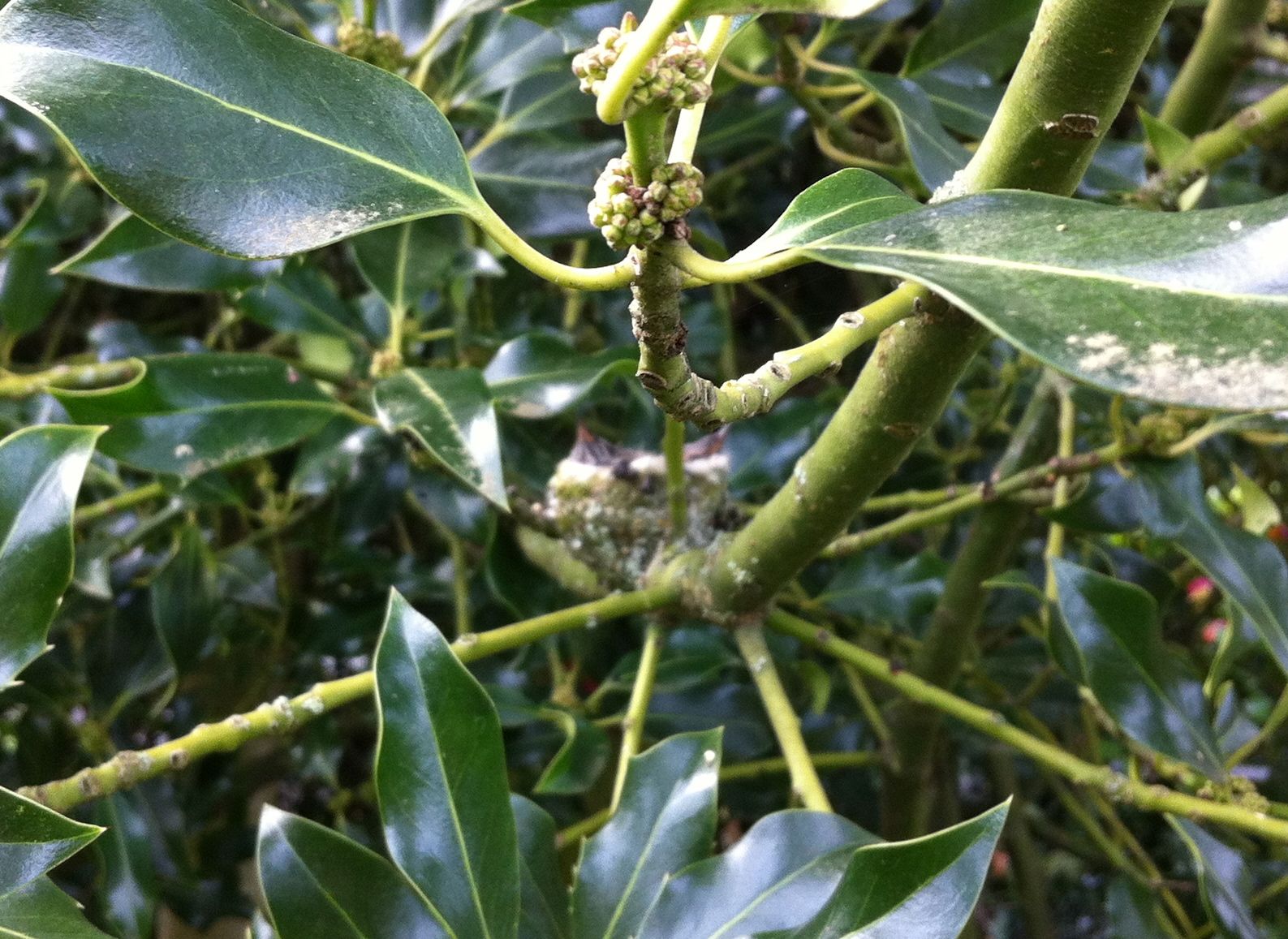
This spring we had the marvelous opportunity to not only see the male mating dance, but then the female made a nest and raised two chicks right in our holly tree. Today as we walked the yard we heard the buzz. Although the Anna's Hummingbird momma and her two chicks had disappeared quite quickly after their birth, today I think we saw the juvenile. It was not as colorful as a fully developed hummingbird and it seemed even smaller than the typical minute adult. Lucky for us it perched. First I lifted S and he saw it. Then I lifted T to see it -- in a branch only about 8 feet away. I don't know if it is as impressive to them- the petite quality and yet the strength of this bird. I am always held in awe. Today I was especially pleased because I am hopeful it is one of those 2 little babies that you can see poking their heads out of the small moss/ lichen covered and spider web lined nest in the picture.
Seeing a hummingbird so closely- and noticing its long beak reminds me of how to teach kids how to identify birds and understand their adaptations by their beaks. Basically use tools as a metaphor, for example from project wild :
Hummingbirds
Use long, slender beaks to probe flowers for nectar
Use a Turkey baster or eye dropper and then for their foodTall vase or cylinder with colored water
No comments:
Post a Comment